
Knowledge Sharing
Blog Posts
Welcome to our blog world full of sectoral developments, technical information and solution suggestions.

High Frequency Circuit Design Tips
HF (High Frequency) circuit design is subject to very different physical rules than traditional DC or low frequency designs. In this world where even a path of a few millimeters creates an inductor effect, the following points should be considered for a successful PCB design:Impedance MatchingTo prevent signal reflections, the impedance between source, transmission line and load (usually 50 Ohm) must be fully compatible. Microstrip calculations are vital at this point.Vias and GroundingThe ground plane in RF circuits must be continuous. The use of via (transition hole) should be kept to a minimum, and when used, protective ground stitches (vias stitching) should be placed around it.Component PlacementCritical components should be placed as close to each other as possible, and high-gain sections and oscillator parts should be physically isolated. This placement pattern is key to passing Electromagnetic Compatibility (EMC) tests.
Read More arrow_forward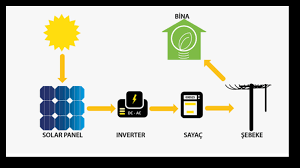
Critical Components in Solar Energy Systems
In the process of transition to renewable energy, electronic components that provide management of these systems are of great importance as well as solar panels. Parts that directly affect the life and efficiency of a PV (Photovoltaic) system are:DC-AC Inverters: IGBT and MOSFET drivers used while converting direct current from panels to alternating current for the grid.MPPT Controllers: DC-DC converters optimized to keep energy drawn from the sun at maximum level.Overvoltage Protectors: Varistor and TVS diode groups that protect panels against lightning and sudden voltage surges.Long Life Passives: High temperature resistance and long life criteria of all passive components (capacitors, resistors) used.
Read More arrow_forward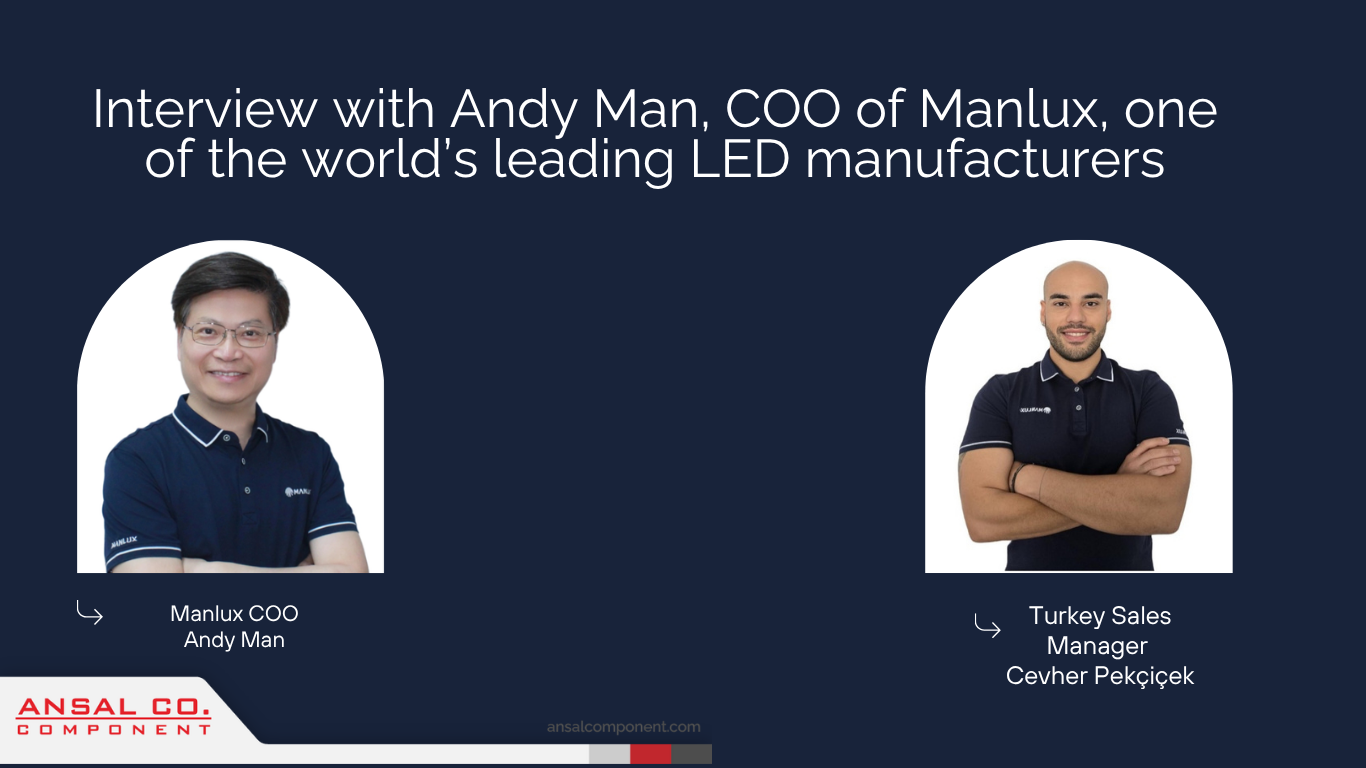
Interview with Andy Man, COO of Manlux, one of the world’s leading LED manufacturers…
QUESTION: How would you briefly define Manlux? Andy: Manlux Technologies Inc. is a global LED technology company headquartered in the USA, driving its innovation through an R&D approach based in Silicon Valley, California. It stands out with a strong engineering infrastructure, particularly in high-efficiency outdoor lighting solutions, and has focused on developing high-performance optoelectronic products for many years. Today, Manlux is positioned as a powerful technology brand aiming to provide end-to-end professional lighting solutions to global customers, with a focus on high luminous efficacy, long life, and system reliability. QUESTION: How does the Manlux brand position itself in the market? Andy: Manlux is one of the high-performance LED light source brands positioned in the premium segment on a global scale. With its focus on high efficiency and high reliability, the brand develops advanced technology solutions specifically for professional outdoor lighting and premium commercial lighting applications. The vision of Manlux is: "Lux for people, light for humanity." Today, the brand continues to grow in many global markets, primarily in India, South America, and Europe, creating a strong global network in the professional lighting industry. QUESTION: What are the strengths of Manlux? Andy: The strongest aspect of Manlux is its engineering approach focused on high efficiency and high reliability. The patented solutions we have developed, especially in LED packaging technologies, offer significant advantages such as gold-wire-free design, anti-sulfuration protection, low blue light approach, and precise color control. Our products are also fully compliant with LM-80 and international photobiological safety standards In addition, our management and R&D team, with backgrounds in Silicon Valley, Philips and Bridgelux, closely follow global industry dynamics to continue developing advanced technology solutions. Our global R&D center in California works together with our automation-supported production infrastructure in Shenzhen to provide high quality standards, stable mass production, and rapid delivery advantages. Today, Manlux is growing actively in many markets, including North America, Europe, India, Brazil, and Southeast Asia. While maintaining our performance approach in the premium segment, we also aim to provide long-term and sustainable solutions to our business partners by offering a strong price/performance balance. QUESTION: Can you summarize Manlux's global business network? Andy: At the center of Manlux's global structure is our global R&D and brand operations center located in San Mateo, Silicon Valley, California, USA. Additionally, our Asia center located in Shenzhen, China, serves as the main base for our R&D, mass production, and Asia-Pacific market operations Today, Manlux has become a global brand with an active business network in many markets, notably North America, Europe, Southeast Asia, India, Brazil, Poland, and Italy. Thanks to the strong collaborations we have established with regional lighting brands, distributors, and project contractors, we continue our global growth in the professional lighting sector. QUESTION: Speaking of the XPH series, what can you tell us about the technology behind it? Andy: The XPH and extended Plus/Max series are our new generation LED packaging solutions that offer significant advantages in terms of performance and reliability compared to traditional EMC products. this series stands out particularly for its high luminous efficacy and outdoor durability Positioned as Manlux's high-power flagship product family, the XPH series is designed for professional outdoor projects requiring high efficiency, such as street lighting, tunnel fixtures, stadium floodlights, and high-mast applications. One of the most important technological foundations of the series is the patented Algoflon XPH material system. This structure significantly increases product reliability in harsh outdoor conditions by providing high temperature resistance, UV resistance, anti-sulfuration protection, and advanced air sealing. Another critical technology is the PECVD (Plasma Enhanced Chemical Vapor Deposition) process. Thanks to this special production process, the products offer higher performance in terms of temperature, humidity, and UV resistance, while also improving light output efficiency and long-term stability. Furthermore, the XPH series is designed to be fully compatible with existing EMC footprint structures This allows manufacturers to transition products without making PCB or optical design changes, thus achieving both cost advantages and ease of application. QUESTION: What are your thoughts on the Future Vision? Andy: With its high-efficiency and high-reliability focused engineering approach, Manlux continues to grow globally in the professional outdoor lighting industry. Our goal, along with our wide solution portfolio in outdoor lighting, is not only to offer high performance but also to develop professional lighting solutions with long life, sustainability, and efficient cost structures. Manlux Türkiye / Market Evaluations Cevher Pekçiçek Turkey Sales Manager: One of the most important parts of our structure in Turkey has been the strong cooperation we established with our business partner, Ansal Komponent. Ansal's experience in the sector, strong technical infrastructure, and high capability in the market are of great importance for the Manlux brand to create a more solid structure in Turkey. Especially thanks to the stock power, fast logistics support, and technical approach it offers to manufacturers, we can provide our customers with faster supply, more sustainable operations, and stronger project management advantages. At the point we have reached today, Manlux and especially the XPH series have gained a strong position in the outdoor lighting segment in Turkey. We see that we have become an important choice especially in projects where high efficiency, system reliability, and cost optimization are critical. At the same time, we attach great importance to developing solutions that offer high reliability, long life, and sustainable performance in prestigious public and infrastructure applications, such as projects complying with TEDAŞ standards. This is because professional manufacturers in the Turkish market today no longer focus only on the initial purchase cost, but also on the product's long-term field performance, energy efficiency, reliability, and operational sustainability. In current global market conditions, correct cost optimization has become as critical as high performance for our manufacturers in Turkey to maintain their competitiveness. In this direction, our goal is to combine high efficiency, long life, and reliability with a strong price/performance balance without compromising our premium segment engineering approach.
Read More arrow_forward
Development of Electric Vehicles and BMS Technologies
The performance, range and safety of electric vehicles (EV) are fully controlled by the Battery Management System (BMS). BMS is a complex structure that tracks the voltage, current and temperature of thousands of lithium-ion cells at the level of milliseconds.In future BMS systems, wireless communication (Wireless BMS) technology now comes to the fore. In this way, complex cable bundles in the battery pack are eliminated, vehicle weight is reduced and production process is simplified. In addition, artificial intelligence algorithms extend battery life by predicting the aging processes of cells.As Ansal Komponent, we have a wide portfolio of solutions for microcontrollers and analog front-end (AFE) chips that comply with automotive standards (AEC-Q).
Read More arrow_forwardSafe Hardware Development: From Physical Layer to Software
We are in a period where cyber attacks are no longer restricted to the software layer, and hardware vulnerabilities are also targeted. To develop a secure hardware, the "Root of Trust" concept must be included in the design from the very beginning.Secure Element (SE) chips store cryptographic keys in an environment protected against physical attacks. In addition, checking the digital signature of the software (firmware) before it runs on the device (Secure Boot) prevents malicious interventions. At the design stage, closing JTAG ports or making them physically inaccessible is a simple but effective security measure.
Read More arrow_forward